
7 Pro Tips for Hiring Commercial Painters in South Florida
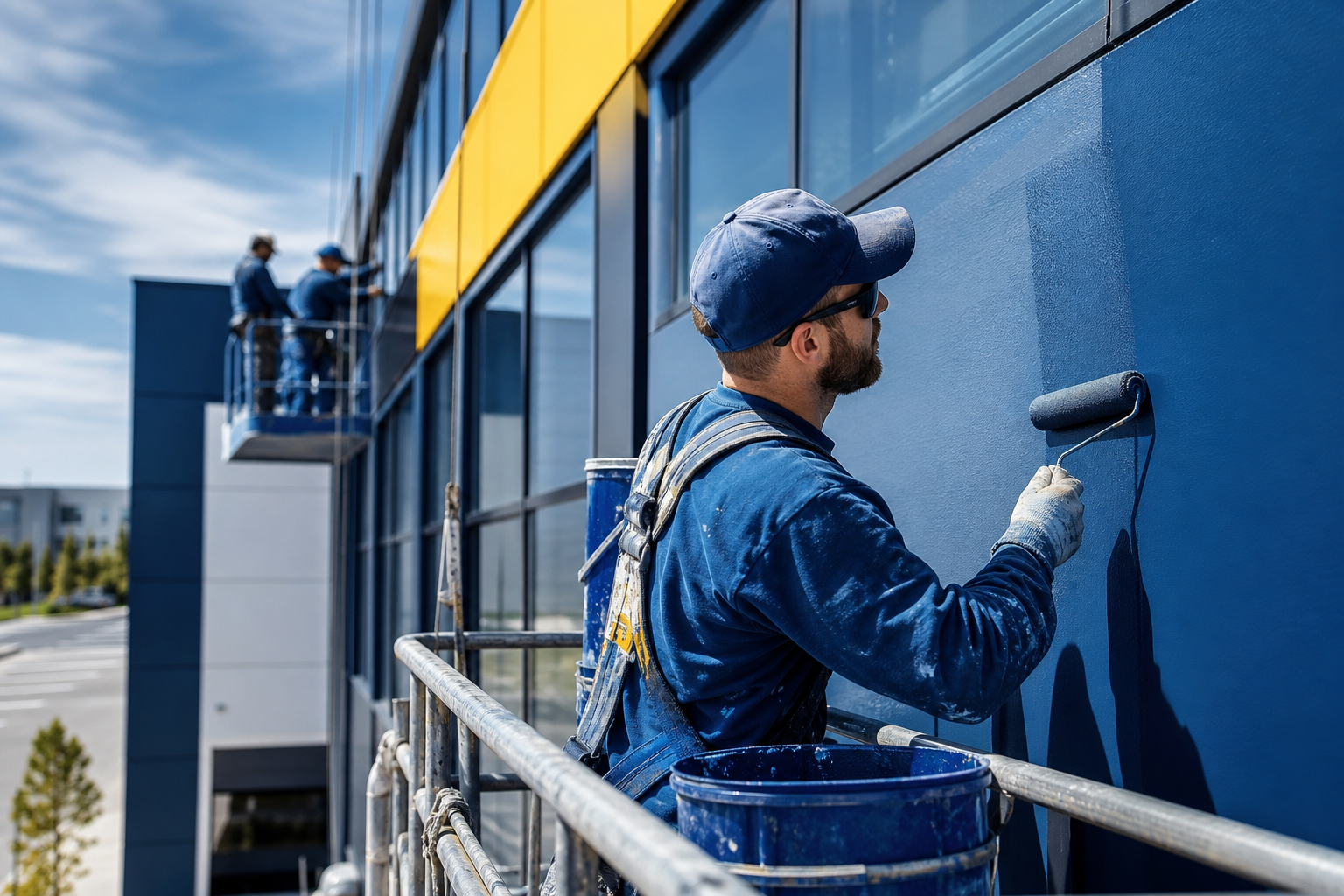
Choosing the right commercial painters for your property is one of the most consequential decisions you will make as a business owner or property manager in South Florida. The stakes are higher than most people realize. A poor paint job on a commercial building does not just look bad. It opens the door to moisture intrusion, accelerated surface degradation, and costly repairs that compound over time.
South Florida’s climate is unforgiving. Salt air, relentless UV exposure, and hurricane-season humidity create conditions that most commercial coatings simply cannot survive without proper preparation and application. The right commercial painting contractor understands this environment. The wrong one will leave you repainting within two years.
This guide gives you seven practical, field-tested tips for evaluating and hiring commercial painters who can deliver results that last in Miami and the surrounding South Florida area.
Tip 1: Verify Licensing, Insurance, and Bonding Before Any Conversation About Price

This is the first filter. It is non-negotiable.
In Florida, painting contractors working on commercial properties are required to hold a valid state license. The Florida Department of Business and Professional Regulation maintains an online database where you can verify any contractor’s license status in minutes. Before you request a quote, confirm that the contractor is:
- Licensed as a painting contractor in the state of Florida
- Carrying general liability insurance with adequate coverage limits
- Carrying workers’ compensation insurance for all employees
- Bonded to protect your property from damage or incomplete work
Skipping this step is the most common and most expensive mistake property owners make. A contractor without proper coverage leaves you financially exposed if a worker is injured on your property or if the project causes structural damage.
Tip 2: Ask Specifically About Commercial Experience, Not Just Painting Experience
Residential and commercial painting are not the same discipline. If you want to understand exactly how they differ, this breakdown of commercial painting in South Florida covers the key distinctions in detail.
The short version: commercial projects involve different surface types, larger square footage, stricter scheduling constraints, and coating systems that must meet specific performance standards. A contractor who primarily paints homes may not have the equipment, crew size, or product knowledge to handle a warehouse, office complex, or retail center properly.
Ask every candidate these direct questions:
- How many commercial projects have you completed in the last 12 months?
- What is the largest commercial project you have managed by square footage?
- Do you have experience with the specific surface types on my property (stucco, concrete block, metal, EIFS)?
- Can you provide references from commercial clients, not residential ones?
The answers will tell you immediately whether you are talking to the right contractor.
Tip 3: Understand What South Florida’s Climate Requires from Your Coating System
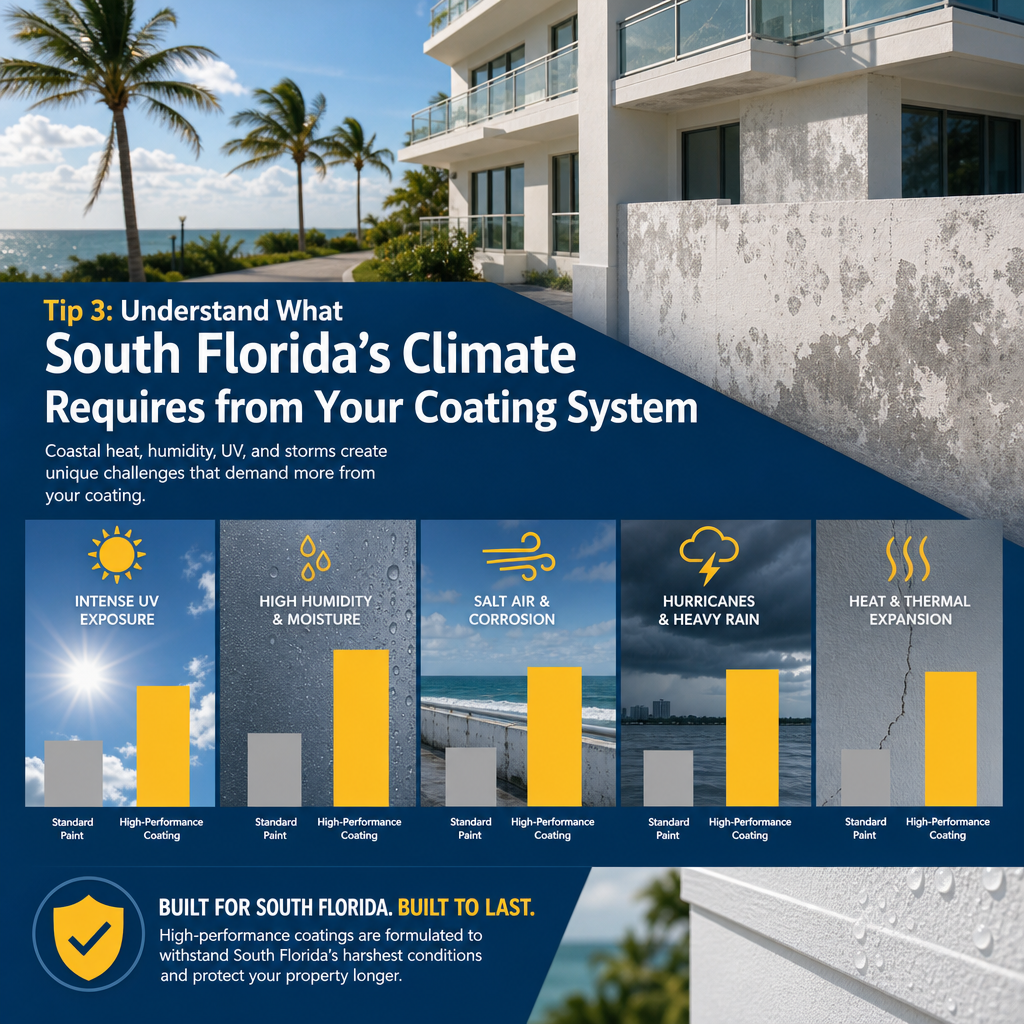
This is where many property owners get misled. Not every paint product performs equally in Miami’s environment. According to research from the American Coatings Association, coating performance in coastal and high-humidity climates depends heavily on formulation, application method, and surface preparation, not just brand name.
Your commercial painters should be able to explain, in plain language, why they are recommending a specific product for your building. They should address:
- Salt air resistance for properties within a few miles of the coast
- Elastomeric or high-build coatings for stucco surfaces prone to cracking
- Mold and mildew-resistant formulations appropriate for South Florida humidity
- UV-stable pigments that resist fading under intense Florida sun
If a contractor cannot explain the reasoning behind their product choices, that is a red flag. Coating selection is a technical decision. It should be treated as one.
Tip 4: Get a Detailed Written Scope of Work, Not Just a Price
A price without a scope is meaningless. Two quotes for the same building can differ by thousands of dollars simply because one contractor is planning to do significantly more work than the other.
Your written scope of work should specify:
- Surface preparation methods (pressure washing, scraping, sanding, patching)
- Number of coats to be applied
- Specific product names and sheen levels
- Areas included and excluded from the project
- How existing damage, cracks, or failing paint will be addressed
- Timeline and daily work schedule to minimize disruption to your operations
When you compare quotes from multiple commercial painters, you are comparing scopes, not just numbers. A lower price that skips surface preparation will cost you far more in the long run. This is the same logic that applies when evaluating painting contractors versus other options for any property in South Florida.
Tip 5: Evaluate Their Project Management Process

Commercial painting projects affect your business operations. A professional contractor manages this reality proactively.
| Factor | What to Look For | Red Flag |
|---|---|---|
| Scheduling | Phased work plan around your business hours | No flexibility or set schedule |
| Communication | Dedicated project manager or point of contact | You have to chase them for updates |
| Crew size | Adequate for project scope and timeline | Understaffed relative to project size |
| Site protection | Masking, drop cloths, containment protocols | Vague answers about protecting surfaces |
| Cleanup | Daily cleanup included in scope | Cleanup treated as optional |
Ask the contractor directly: who will be your point of contact during the project? How will they communicate progress? What happens if weather delays the schedule?
A contractor who cannot answer these questions clearly has not managed many commercial projects successfully.
Tip 6: Check Reviews and Request References from Similar Projects
Online reviews give you a general sense of a contractor’s reputation. References give you specific, verifiable information.
When you request references, ask for clients from projects that are similar to yours in scope and property type. A contractor who has successfully painted retail centers, office buildings, or industrial facilities in Miami and South Florida will have no hesitation providing those contacts.
When you speak with references, ask:
- Was the project completed on schedule?
- Did the final invoice match the original quote?
- How did the contractor handle unexpected issues or surface problems?
- How does the paint job look 12 to 24 months later?
- Would you hire them again for your next commercial project?
The Painting Contractors Association recommends checking multiple references for any commercial painting project, particularly for large-scale exterior work. This step takes 30 minutes and can save you months of headaches.
Tip 7: Prioritize Contractors with Deep Local Knowledge of South Florida
This tip matters more than most property owners expect. South Florida is not a generic market. Miami, Miami Springs, and the surrounding coastal areas present specific challenges that only contractors with genuine local experience are equipped to handle.
Local knowledge means understanding:
- Which products perform best in high-humidity, salt-air environments
- How to schedule exterior work around South Florida’s afternoon rain patterns
- How hurricane season affects project timelines and coating cure times
- Which surface conditions are common on older Miami-area commercial buildings
- How to meet local building codes and HOA or property management requirements
A contractor from outside the region may be technically competent but still underestimate what South Florida demands. When you are protecting a commercial asset, local expertise is not a bonus. It is a baseline requirement.
If you want a broader sense of what to look for when searching for painting professionals in this region, this guide to painting services in South Florida covers how to evaluate your options effectively.
Conclusion
Hiring the right commercial painters in South Florida comes down to preparation on your end. Verify credentials first. Ask targeted questions about commercial experience. Demand a detailed written scope. Evaluate their project management process. Check real references from comparable projects. And prioritize contractors who understand the specific demands of Miami’s climate.
The quality of your commercial paint job affects how your property looks, how long your surfaces last, and how well your building holds up against South Florida’s weather. Those outcomes are worth the time it takes to choose carefully.
González Painting and Waterproofing Inc. has served commercial property owners across Miami, Miami Springs, and South Florida with the expertise and local knowledge this market demands. If you are ready to get a detailed, honest assessment of your commercial painting project, contact us today for a consultation.