
7 Things Every Business Owner Should Know Before Hiring a Commercial Painter in South Florida
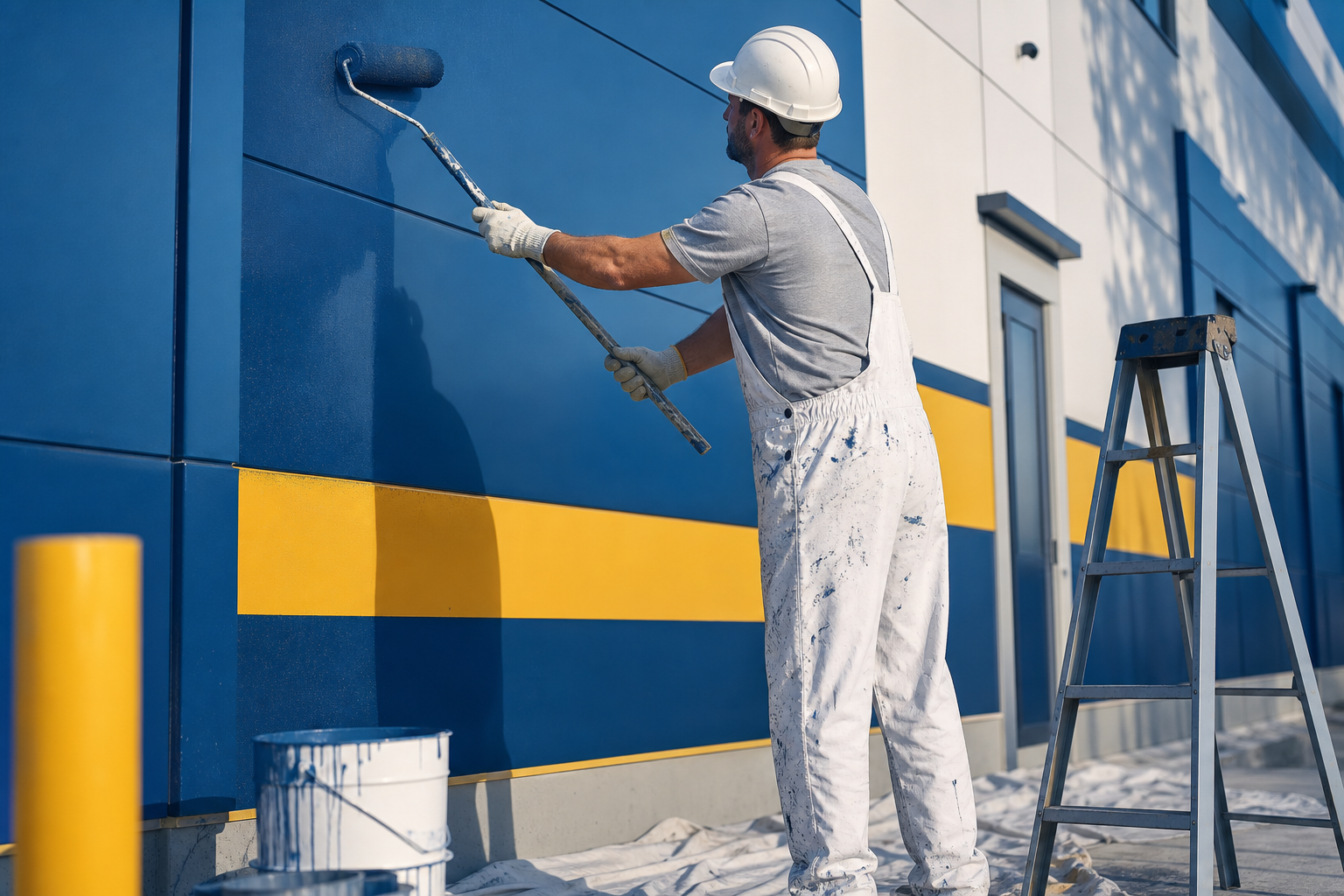
Running a business in Miami means every decision you make about your property carries real stakes. Your building’s exterior is the first impression clients, partners, and customers receive. A faded facade, peeling paint, or water-stained walls communicates neglect before anyone walks through the door.
Commercial painting is not the same as residential painting. The materials are different. The preparation is different. The standards are different. And in South Florida, where salt air, intense UV radiation, and hurricane season push every surface to its limit, the stakes are even higher.
Before you sign a contract with any commercial painting contractor, here are seven things you need to know.
1. What Is Commercial Painting, and Why Does It Differ from Residential Work?
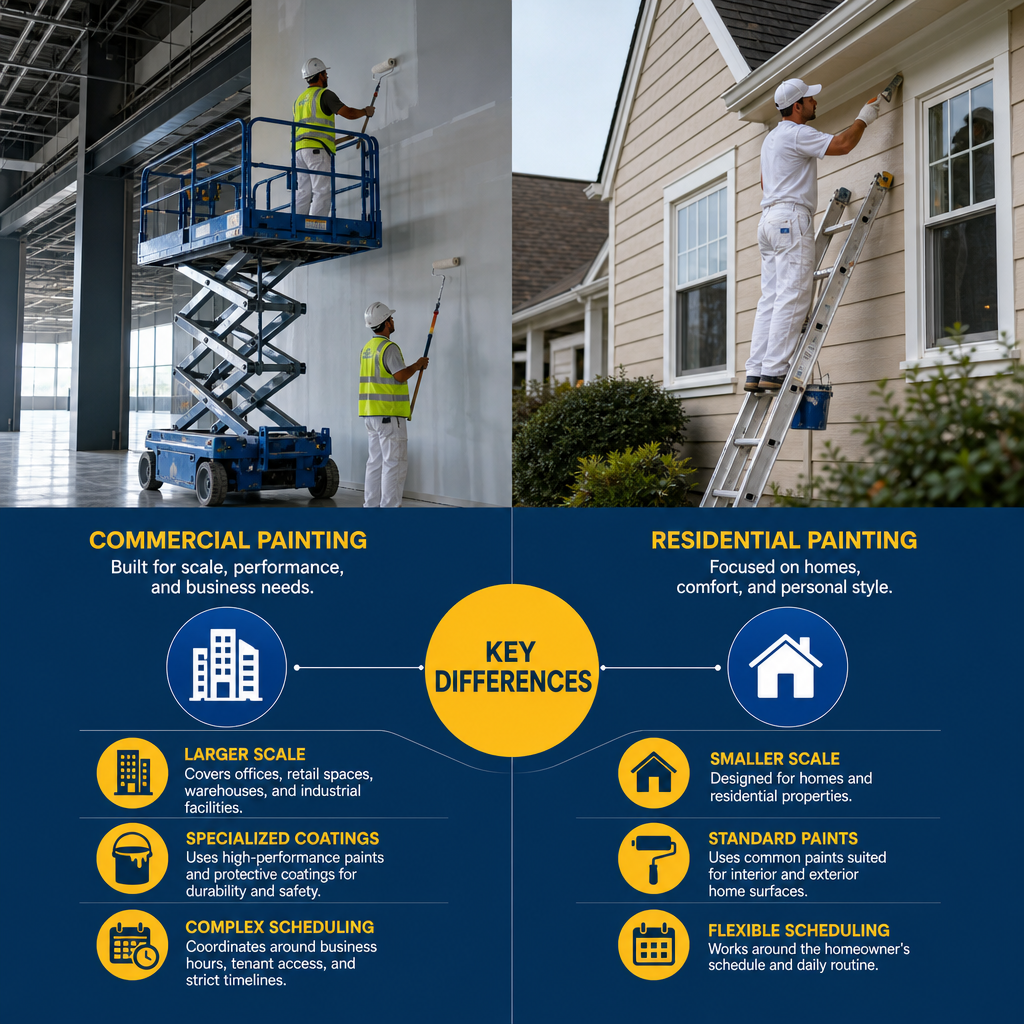
Commercial painting covers painting services for businesses, office buildings, retail spaces, warehouses, multi-family properties, and industrial facilities. The scale is larger, the coatings are more specialized, and the scheduling demands are more complex.
A residential painter works around a homeowner’s schedule. A commercial painter works around your business operations, your tenants, and your clients. That means early morning crews, weekend shifts, and phased project timelines that keep disruption to a minimum.
The coatings used in commercial painting are also formulated differently. They are designed for higher traffic, greater durability, and faster return-to-service times. These are not details you can afford to overlook.
2. Does Your Building’s Location in South Florida Change What Products Should Be Used?
Yes, significantly.
South Florida’s climate creates a unique set of demands that most paint manufacturers address with specialized product lines. If your contractor is not selecting coatings specifically rated for high-humidity, UV-intense, and salt-air environments, you are setting yourself up for premature failure.
Here is what the South Florida environment does to commercial surfaces:
- UV radiation breaks down binders in standard paints, causing chalking and fading within one to two years
- Salt air accelerates corrosion on metal substrates and degrades adhesion on masonry
- Humidity and rain cycles create conditions for mold, mildew, and moisture intrusion
- Hurricane-force winds test the adhesion and flexibility of every coating on your building
Understanding what South Florida’s climate demands from exterior paint is the foundation of any smart commercial painting decision. The same principles that apply to residential exteriors apply at a larger and more consequential scale for commercial properties.
3. What Questions Should You Ask Before Hiring a Commercial Painting Contractor?
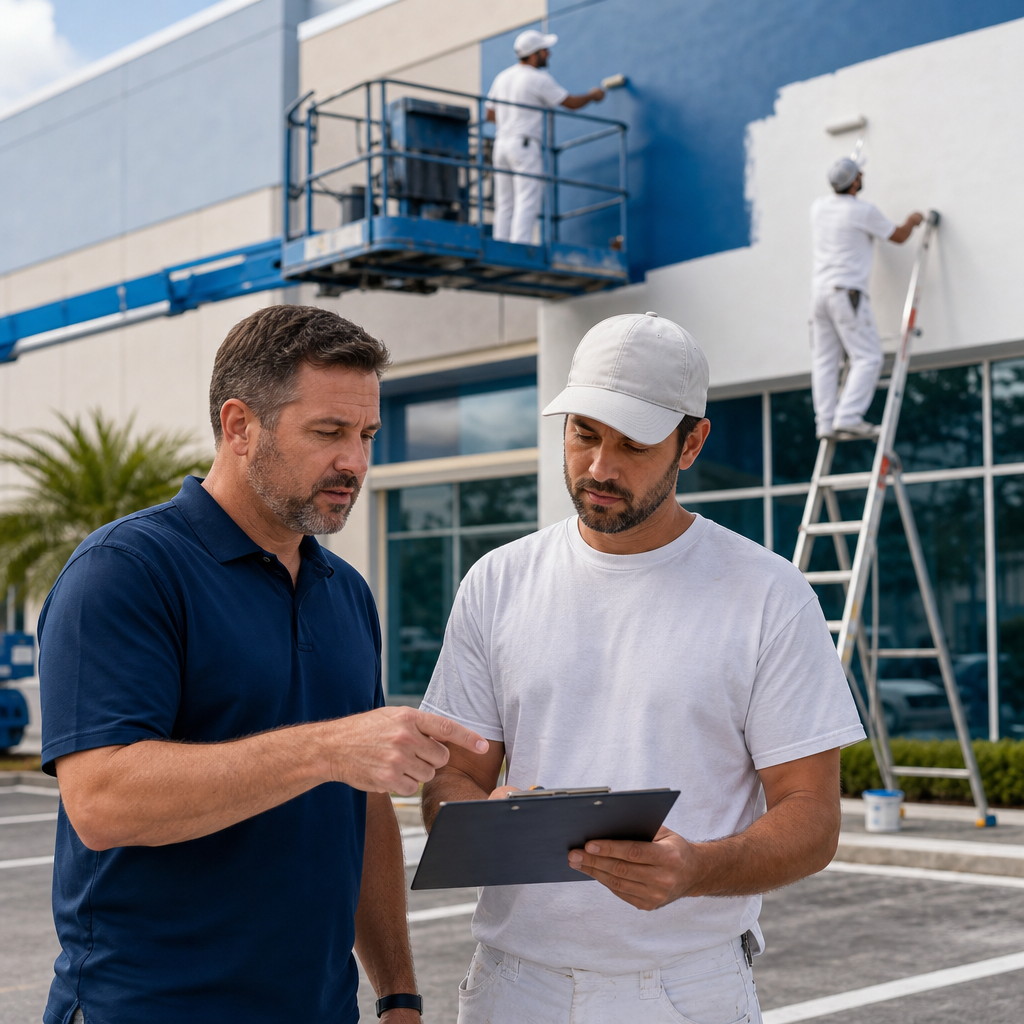
Not every contractor who offers commercial painting has the experience to deliver at a professional standard. Here are the questions that separate qualified contractors from underqualified ones.
Ask about their licensing and insurance. In Florida, painting contractors must hold a valid state license. Commercial projects require general liability insurance and workers’ compensation coverage. Do not accept verbal assurances. Request certificates.
Ask for a detailed scope of work. A professional contractor provides a written proposal that specifies surface preparation methods, the exact products being used, the number of coats, and the warranty terms. Vague proposals lead to disputes.
Ask about their experience with your building type. A contractor experienced in painting concrete tilt-wall warehouses has different expertise than one who specializes in multi-story office buildings. Ask for relevant project references.
Ask how they handle surface preparation. Preparation is the most important phase of any commercial painting project. Power washing, crack repair, priming, and caulking determine how long the final coat lasts. If a contractor minimizes this step, that is a warning sign.
4. How Does Surface Preparation Affect the Longevity of Commercial Paint Jobs?
Surface preparation is where commercial painting projects succeed or fail. The paint itself is only as good as what it adheres to.
On commercial properties in Miami and the surrounding South Florida area, surfaces typically accumulate years of dirt, biological growth, efflorescence, and in some cases, failed previous coatings. Applying fresh paint over any of these conditions shortens the lifespan of the new coat dramatically.
A professional commercial painting process includes:
- Pressure washing to remove contaminants, mold, and loose material
- Crack and joint repair using appropriate elastomeric fillers rated for South Florida’s thermal movement
- Priming with a product matched to the substrate, whether concrete, stucco, metal, or wood
- Caulking around windows, doors, and penetrations to prevent moisture intrusion
According to the Painting Contractors Association, proper surface preparation accounts for the majority of a coating’s long-term performance. Cutting corners here costs significantly more in the long run.
5. What Coating Types Are Most Commonly Used in Commercial Painting?
The right coating depends on your substrate, your building’s exposure, and your performance expectations. Here is a comparison of the most common commercial coating types used in South Florida.
| Coating Type | Best For | Key Benefit | Typical Lifespan |
|---|---|---|---|
| Elastomeric | Stucco and masonry | Bridges cracks, waterproof | 10 to 15 years |
| Acrylic Latex | General exterior surfaces | UV resistance, flexibility | 7 to 10 years |
| Epoxy | Floors, parking garages | Extreme durability | 5 to 10 years |
| Alkyd/Oil-Based | Metal surfaces, trim | Hard finish, corrosion resistance | 5 to 8 years |
| Waterproofing Coatings | Concrete, block walls | Prevents moisture intrusion | 10 to 20 years |
Elastomeric coatings are particularly well suited to South Florida commercial buildings. They expand and contract with temperature changes, resist hurricane-driven rain, and create a seamless moisture barrier over stucco and concrete block. For buildings in Miami Springs and coastal areas, this is often the most practical choice.
6. How Do You Plan a Commercial Painting Project Around Business Operations?
Timing and logistics matter as much as the quality of the work itself. A commercial painting project that disrupts your tenants, customers, or operations creates costs beyond the invoice.
A well-organized commercial painting contractor works with you to develop a phased schedule. Here is how a structured project plan typically looks:
- Pre-project walkthrough to identify access restrictions, sensitive areas, and scheduling constraints
- Phased surface preparation to allow sections of the building to remain accessible during work
- Staged application to minimize odor, wet surface contact, and access disruption
- Final inspection with a documented punch list to address any touch-ups before project close
In Miami and throughout South Florida, weather is a constant variable. A professional contractor monitors forecasts and builds flexibility into the schedule, particularly during the summer rainy season and the Atlantic hurricane season, which runs from June through November.
The National Hurricane Center provides up-to-date storm tracking that responsible South Florida contractors use to protect freshly applied coatings and manage project timelines responsibly.
7. What Does a Commercial Painting Project Actually Cost, and What Affects the Price?
Cost is a legitimate concern for any business owner. Commercial painting is an investment, and understanding what drives pricing helps you evaluate proposals accurately.
Several factors influence the total cost of a commercial painting project:
- Square footage of paintable surface area
- Building height and the equipment required to access upper levels
- Substrate condition and the extent of preparation work needed
- Number of coats and the quality of specified coatings
- Scheduling requirements such as night or weekend work
- Scope of waterproofing included in the project
The Painting Industry’s cost benchmarks indicate that investing in higher-quality coatings and thorough preparation consistently delivers a lower total cost of ownership over the life of the building. A cheaper project that requires repainting in three years costs more than a properly executed project that lasts ten.
Be cautious of proposals that are significantly below the market range. In commercial painting, low bids typically reflect shortcuts in preparation, lower-grade materials, or inadequate labor. Your building deserves better.
Conclusion
Commercial painting is one of the highest-visibility investments you make in your South Florida property. Done correctly, it protects your building from the region’s demanding climate, projects a professional image to everyone who sees it, and adds lasting value to your asset.
Done incorrectly, it costs you twice.
The seven points above give you the foundation to evaluate contractors, understand the process, and make decisions with confidence. You are not just hiring someone to apply paint. You are hiring a team to protect a significant asset in one of the most challenging climates in the country.
González Painting and Waterproofing Inc. has built its reputation serving commercial clients across Miami, Miami Springs, and South Florida with exactly this level of care and expertise. If you are planning a commercial painting project and want to speak with a team that understands what your building actually needs, reach out to us directly. We are here to help you make the right call.