
How to Choose and Apply Exterior House Paint in South Florida

Your home’s exterior is the first thing anyone sees. It is also the first line of defense against everything South Florida throws at it, from hurricane-force winds and salt air to relentless UV exposure and sudden tropical downpours. Choosing the right exterior house paint is not simply a cosmetic decision. It is a structural one.
This guide walks you through every step of the process, from selecting the right product for Miami’s climate to preparing your surface and applying paint that will actually last. Whether you are refreshing a tired facade or repainting after storm damage, this is the information you need to do it right.
Step 1: Understand What South Florida’s Climate Demands from Exterior Paint

Miami is not like the rest of the country. The combination of high humidity, salt air, intense sun, and hurricane season creates conditions that will expose every weakness in a substandard paint job.
Before you choose a single color or open a single can, you need to understand what your exterior paint must withstand.
Here is what South Florida’s environment does to unprotected or poorly painted surfaces:
- UV degradation causes fading, chalking, and surface breakdown within months on low-quality products.
- Moisture intrusion leads to blistering, peeling, and eventually mold growth behind the paint film.
- Salt air corrosion accelerates rust on metal elements and weakens adhesion on masonry and wood.
- Thermal expansion from extreme heat cycles causes paint to crack if it lacks flexibility.
The right exterior house paint for a home in Miami Springs or Coral Gables needs to address all four of these stressors. A product that performs well in a dry northern climate may fail here within a single rainy season.
Step 2: Choose the Right Type of Exterior House Paint
Not all exterior paints are created equal. The type of paint you select determines how well it bonds, how long it lasts, and how it holds up against the specific conditions of your property.
What Are the Main Types of Exterior Paint?
100% Acrylic Latex Paint is the gold standard for South Florida homes. It offers superior flexibility, which means it expands and contracts with temperature changes without cracking. It also resists mildew, dries quickly, and cleans up with water.
Elastomeric Paint is a thicker, high-build coating that bridges hairline cracks in stucco and masonry. For older Miami homes with textured stucco exteriors, elastomeric paint provides an additional layer of waterproofing protection.
Alkyd or Oil-Based Paint has largely been replaced by high-quality acrylics for exterior use. It takes longer to dry and is more susceptible to moisture-related failures in humid climates.
Here is a quick comparison to help you decide:
| Paint Type | Best For | Flexibility | Mildew Resistance | Dry Time |
|---|---|---|---|---|
| 100% Acrylic Latex | Wood, fiber cement, stucco | High | Excellent | 1 to 2 hours |
| Elastomeric | Stucco, masonry, concrete | Very High | Excellent | 4 to 6 hours |
| Alkyd/Oil-Based | Trim, metal surfaces | Low | Moderate | 8 to 24 hours |
| Acrylic-Alkyd Hybrid | Trim, doors, detailed woodwork | Moderate | Good | 4 to 6 hours |
For most residential exteriors in Miami and the surrounding South Florida area, 100% acrylic latex or elastomeric coatings are the right choice. The American Coatings Association provides additional technical guidance on paint formulations and performance standards if you want to dig deeper into product specifications.
Step 3: Select the Right Sheen Level

Sheen affects more than appearance. It directly impacts how well your exterior paint repels moisture, resists dirt, and holds up to cleaning.
Here is how sheen levels break down for exterior applications:
- Flat or Matte: Hides surface imperfections well but is harder to clean and less moisture-resistant. Best for soffits or low-traffic areas.
- Satin: The most popular choice for exterior walls. It offers a soft glow, good washability, and solid moisture resistance.
- Semi-Gloss: Ideal for trim, doors, shutters, and accent elements. It is highly durable and easy to wipe clean.
- Gloss: Reserved for doors and decorative metalwork. It provides maximum durability but highlights surface flaws.
For the main body of a South Florida home, satin is the most practical choice. It handles humidity well and does not show every nick and scratch the way gloss finishes do.
Step 4: Prepare Your Surface Properly
Surface preparation is where most paint jobs fail. Even the best exterior house paint will not adhere correctly to a dirty, chalky, or damaged surface.
This step requires patience. Do not skip it.
How Do You Prepare an Exterior Surface for Paint?
Follow this sequence before you open a single can:
1. Pressure wash the entire surface. Remove dirt, mildew, algae, and chalking from the existing paint film. Allow the surface to dry completely, which in Miami’s humidity may take 24 to 48 hours.
2. Scrape and sand loose or peeling paint. Any paint that is not firmly bonded to the substrate must come off before you apply a new coat.
3. Repair cracks, holes, and damaged stucco. Use a compatible patching compound and allow it to cure fully before priming.
4. Caulk all gaps and joints. Pay particular attention to windows, door frames, and any penetrations in the wall. This is a critical waterproofing step for South Florida homes.
5. Apply a quality primer. Primer improves adhesion, seals porous surfaces, and provides a uniform base for your topcoat. Do not skip this step, even if the product is labeled as paint-and-primer-in-one.
The Environmental Protection Agency’s guidance on exterior painting and surface preparation is also worth reviewing, particularly for older homes where lead-based paint may be present.
Step 5: Apply Exterior House Paint Correctly
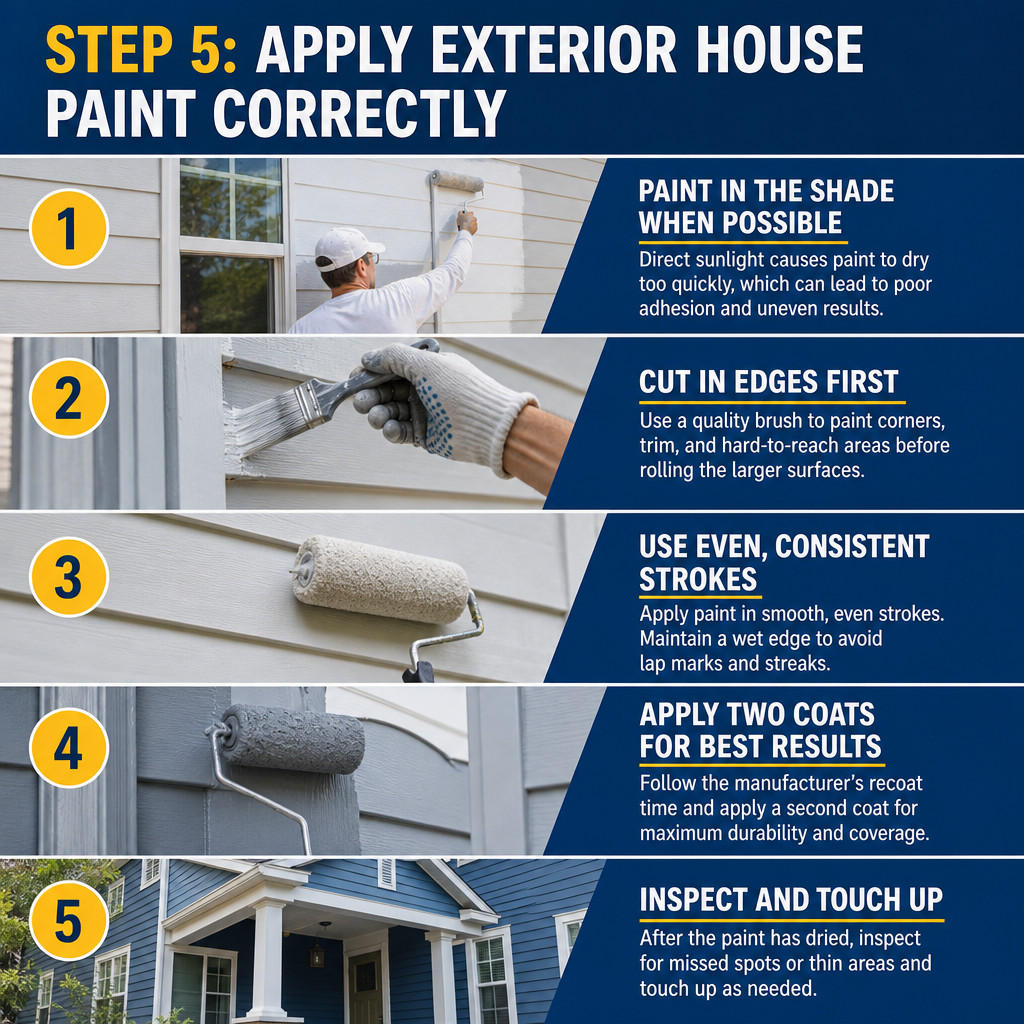
Proper application technique is just as important as product selection. A quality paint applied incorrectly will underperform.
Here is what to keep in mind during application:
- Paint in the shade when possible. Direct sunlight causes paint to dry too quickly, which compromises adhesion and can cause lapping marks.
- Avoid painting in high humidity or before rain. Check the forecast. Paint applied to a surface that will get wet within 24 hours is at risk for failure.
- Apply two full coats. One coat is rarely sufficient for long-term protection, especially on South Florida exteriors that take constant UV abuse.
- Follow the manufacturer’s recoat window. Applying a second coat too soon or too late can compromise the final film integrity.
- Work top to bottom. Start at the roofline and work downward to catch any drips before they dry.
For large surfaces like two-story homes, a sprayer is the most efficient tool. However, back-rolling after spraying is essential on textured stucco to ensure full penetration into the surface profile.
Step 6: Know When to Call a Professional
Some projects are well within the reach of a motivated homeowner. Others are not.
If your home has significant stucco damage, active moisture intrusion, or a history of paint failure, the problem is likely deeper than the paint itself. Applying new exterior house paint over an unresolved moisture issue will not fix the problem. It will hide it temporarily and make it worse.
Professional painters in Miami bring more than labor. They bring knowledge of local building materials, familiarity with how South Florida’s climate affects specific substrates, and access to commercial-grade products that are not always available at retail stores. According to Consumer Reports’ guidance on hiring painting contractors, verifying licensing, insurance, and references before hiring is essential to protecting your investment.
González Painting and Waterproofing Inc has served South Florida homeowners for years, combining exterior painting with professional waterproofing services that address the root causes of paint failure rather than just the surface symptoms.
Conclusion
Choosing and applying exterior house paint in South Florida is a process that rewards careful planning. The right product, properly prepared surface, and correct application technique will give you a finish that holds up against Miami’s heat, humidity, and storm season for years.
Here is a quick recap of what matters most:
- Select 100% acrylic latex or elastomeric paint for South Florida conditions.
- Match your sheen level to the surface and its function.
- Never skip surface preparation. It is the foundation of a lasting paint job.
- Apply two full coats and follow manufacturer guidelines.
- Address moisture issues before painting, not after.
If you are ready to protect and refresh your home’s exterior, González Painting and Waterproofing Inc is here to help. Contact our team today for a consultation and let us bring the expertise your South Florida home deserves.